
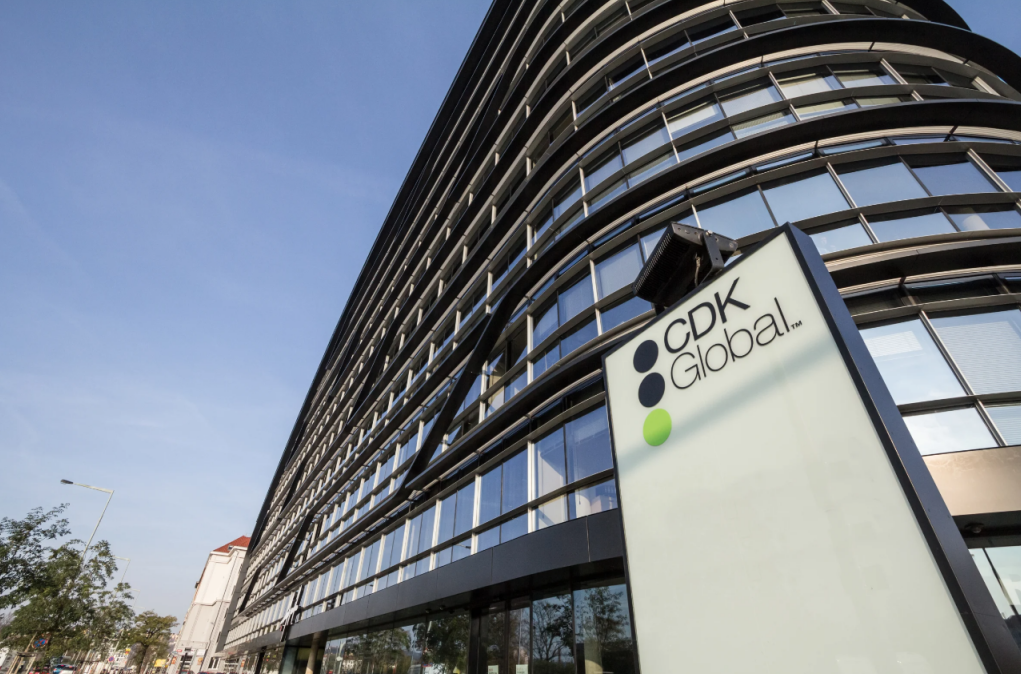
Introduction to CDK Global
CDK Global is a leading provider of integrated technology solutions tailored for the automotive retail industry. Established in 1972 and headquartered in Hoffman Estates, Illinois, CDK offers a comprehensive suite of services, including dealership management systems, digital marketing, and customer relationship management (CRM) solutions. By automating and integrating various aspects of dealership operations, CDK's software supports over 15,000 retail locations across North America, facilitating everything from inventory management to sales processing and customer service.
Timeline and Nature of the Cyberattacks
The cyber turmoil for CDK Global began on the morning of June 19, 2024, when the company first became aware of a security breach. CDK swiftly shut down its IT systems to prevent further damage. This initial disruption led to a significant outage, affecting thousands of dealerships that rely on CDK's software for daily operations. The situation escalated days later, as the company suffered a second cyberattack while efforts were underway to restore services. This subsequent attack compelled CDK to shut down its systems again, deepening the operational challenges for dealerships. Full restoration was completed by July 4, 2024, roughly two weeks after the initial breach.
Who's Behind It
The attack has been attributed to BlackSuit, a ransomware group the US Department of Health and Human Services' Health Sector Cybersecurity Coordination Center identifies as closely related to Royal ransomware, itself a successor to the disbanded Conti operation. BlackSuit initially demanded 10 million dollars from CDK, a figure that escalated to more than 50 million as negotiations continued. Blockchain intelligence firm TRM Labs traced a payment of roughly 25 million dollars, about 387 bitcoin, to a BlackSuit-affiliated wallet two days after the attack began, corroborated independently by CNN and CyberScoop. CDK has never publicly confirmed making the payment.
Challenges Posed by the Attacks
The immediate consequence of the cyberattacks was widespread operational paralysis across numerous car dealerships. Dealers, unable to access the necessary digital tools provided by CDK, resorted to manual processes like paper and pen to manage sales transactions and customer interactions. Anderson Economic Group, an economic consulting firm that tracked the disruption in real time, put total direct losses to affected dealers at 1.02 billion dollars across the three weeks from June 19 to July 5, based on an estimated 56,200 lost new-vehicle sales alone. Another significant challenge was the communication and trust barrier that emerged. Scammers took advantage of the confusion to impersonate CDK support staff, prompting the company to warn dealers directly about phishing attempts tied to the outage.
The Data Question
CDK initially stated that dealership customer and employee data had not been compromised. That turned out to be only part of the picture. CDK later filed a formal data breach notification confirming that a third party had accessed files containing names, addresses, and Social Security or tax ID numbers, though for a narrower group: vendors of CDK and its corporate predecessor, not the broader base of dealership customers. Separately, multiple class-action lawsuits filed against CDK allege that dealership customers' Social Security numbers, driver's license information, and financial account details were exposed in the incident, claims CDK disputes and that remain unresolved in litigation.
Industry Implications
The cyberattacks on CDK Global underscore a critical vulnerability within the automotive retail sector: reliance on centralized, integrated technology solutions. While these systems offer operational efficiencies, they also present a single point of failure that can have cascading effects across thousands of dependent businesses. With one provider controlling a large share of the dealer management software market, a single breach concentrated operational risk across a significant portion of the industry simultaneously. The incident is a stark reminder of the importance of cybersecurity diligence and could push the industry toward more resilient contingency planning, even where centralized systems remain in place.
Conclusion
The CDK Global cyberattacks represent a significant event that has already reshaped how the automotive retail industry thinks about vendor concentration risk. The confirmed $ 1.02 billion toll to dealers, the likely $ 25 million ransom payment, and the still-unresolved litigation over customer data collectively make this one of the costliest single-vendor breaches in the sector's history. The lesson for CDK's customers and its industry peers is less about any one company's failure and more about what happens when a large share of an entire sector depends on one provider's uptime.
Sources
US Department of Health and Human Services, Health Sector Cybersecurity Coordination Center, Analyst Note on BlackSuit Ransomware. hhs.gov/sites/default/files/blacksuit-ransomware-analyst-note-tlpclear.pdf
Commonwealth of Massachusetts, Office of the Attorney General, CDK Global data breach notification filing. mass.gov/doc/2024-1703-cdk-global-llc/download
CyberScoop, "Wallets tied to CDK ransom group received $25 million two days after attack." cyberscoop.com/cdk-ransom-blacksuit-25-million
CNN Business, "How did the auto dealer outage end? CDK almost certainly paid a $25 million ransom." cnn.com/2024/07/11/business/cdk-hack-ransom-tweny-five-million-dollars/index.html
Anderson Economic Group, "Dealer Losses Due to CDK Cyberattack Reach $1.02 Billion." andersoneconomicgroup.com/dealer-losses-due-to-cdk-cyberattack-reach-1-02-billion
CBS News, "CDK Global faces multiple lawsuits from dealerships crippled by cyberattack." cbsnews.com/news/cdk-global-lawsuits-cyberattack